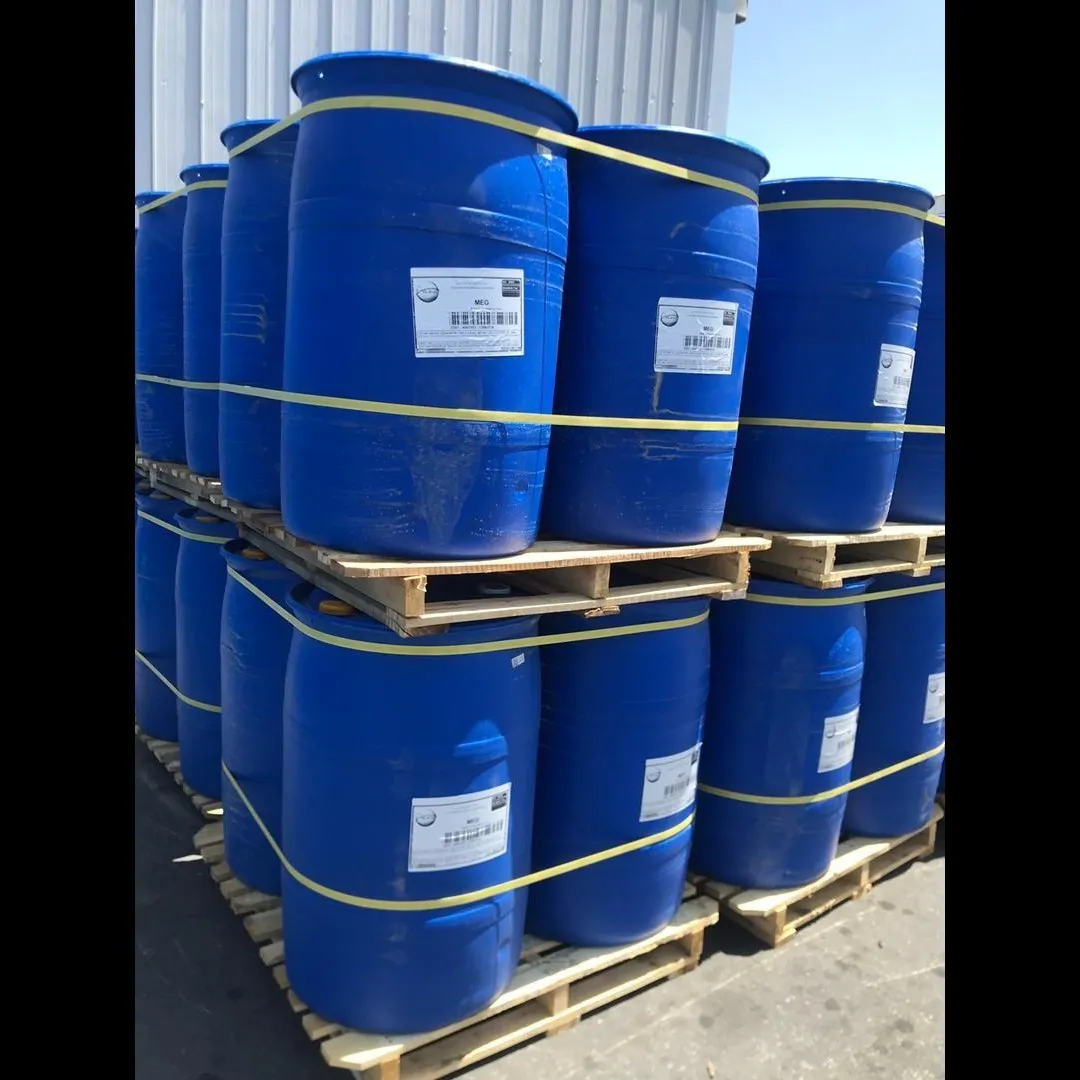
Mono Ethylene Glycol (MEG)
Mono Ethylene Glycol (MEG), also known as Ethylene Glycol, is a clear, colorless, low-volatility and hygroscopic liquid widely used as an important industrial chemical and raw material. Its chemical formula is C₂H₆O₂ and its CAS Number is 107-21-1. MEG is completely miscible with water and is commonly used in polyester manufacturing, PET production, antifreeze and coolant formulations, heat-transfer fluids, solvents and several other industrial applications.
Key Properties of Mono Ethylene Glycol
- Chemical Name: Mono Ethylene Glycol / Ethylene Glycol
- IUPAC Name: Ethane-1,2-diol
- Chemical Formula: C₂H₆O₂
- CAS Number: 107-21-1
- Molecular Weight: Approximately 62.08 g/mol
- Appearance: Clear, colorless liquid
- Boiling Point: Approximately 197°C
- Specific Gravity: Approximately 1.115 at 20°C
- Purity: Industrial grades commonly available at 99.9% minimum
- Solubility: Completely miscible with water
Industrial Applications of MEG
1. Polyester & Textile Industry
MEG is an important raw material for producing polyester fibers, polyester resins and related textile materials.
2. PET Manufacturing
Mono Ethylene Glycol is extensively used in the manufacture of Polyethylene Terephthalate (PET) used for bottles, films and packaging materials.
3. Antifreeze & Coolants
MEG is widely used as a base fluid in automotive antifreeze and coolant formulations because of its ability to modify the freezing and boiling characteristics of water.
4. Heat Transfer Fluids
Its thermal properties make MEG useful in heat-transfer and temperature-control systems.
5. Solvents & Industrial Formulations
MEG can function as an industrial solvent and is used in selected formulations involving inks, coatings and other chemical products.
6. Oil & Gas Applications
MEG is used as a hydrate inhibitor in natural-gas processing applications.
7. Aviation De-Icing Applications
MEG-based formulations can be used in aircraft de-icing and anti-icing applications.
Why Choose Quality Mono Ethylene Glycol?
High-purity MEG helps manufacturers maintain consistent process performance and product quality. Industrial specifications can include purity, water content, acidity, iron, chloride, ash and DEG limits, depending on the intended application and grade.
Keywords